
Meta-research for Open Science

Logo OpenScienceLab con naranja

Meta-research for Open Science

The OpenScienceLab research group at Universidad Carlos III de Madrid is dedicated to meta-research for open science; evaluating scientific practices, designing policies, and training researchers to promote transparency, quality, and collaboration in scientific research. Its objective is to drive a positive change in the scientific community and contribute to the advancement of knowledge by implementing ethical, reproducible, and accessible practices.

Metascience and cross-disciplinary training require scientists with experience in conducting empirical research and a solid command of the details across multiple fields of expertise [1].

[1] M. Maruyama, K. L. Beals, A. Bharati, H. Fuchs, P. M. Gardner, G. M. Guilmet, R. A. Hahn, L. J. Kamau, D. B. Kronenfeld, C. O. Kursh, J. W. Meeker, A. K. B. Pillai, K. H. Pribram, D. Quiatt, M. Richardson, M. B. Rogers, L. Romanucci-Ross, and P. Van Esterik, “Mindscapes and Science Theories [and Comments and Reply],” Current Anthropology, vol. 21, no. 5, pp. 589–608, Oct. 1980. Accessed: Apr. 2025. [Online]. Available: https://doi.org/10.1086/202539
Holistic and interdisciplinary approach

The research group stands out for its interdisciplinary approach, which spans various scientific fields and focuses on the comprehensive analysis of the research cycle and its outcomes. To achieve this, it combines traditional methods of quantitative science studies, informetrics and research evaluation with practices and resources from disciplines such as psychology, cognitive neuroscience, history of science, ethics, forensic scientometrics, and data science, among others.

News & Events

Research Agora Wins the XXIII Junior Award Granted by the City Council of Málaga

The company has won a €10,000 prize thanks to its open science digital platform. This platform transforms how scientific research is shared, validated, and evaluated, allowing researchers to publish ‘Marbles’, short peer-reviewed contributions, such as negative data, replications, and alternative methods, complementing previously published studies.

The Human Infrastructure of Open Science: Why Mentorship Matters More Than Ever

Check out the latest publication by Pablo Sánchez-Núñez in Upstream. A must-read for anyone shaping the future of research!

TWIN4MERIT – International Thematic Symposium

The TWIN4MERIT International Thematic Symposium will provide a platform for experts to discuss the evolving landscape of research assessment. Check all the details!

Wikidata Recognized as a Digital Public Good

Wikidata has been officially recognized as a Digital Public Good!

This recognition celebrates its role as the world’s largest open knowledge graph — empowering people everywhere with free, reliable, and connected information that supports transparency, innovation, and equitable access to knowledge across the globe.

Scoping review on research data in Spain: Academic output and developing trends. By Roxana Cerda Cosme and Eva Mendez

This article presents a comprehensive overview of how research data have been studied in Spain over the past decade. Through a scoping review based on the Arksey and O’Malley framework, the authors analyze 26 publications to map trends, themes, and methodologies in the field.

Eva Méndez, will be one of the voices in the online exhibition Who Owns Our Knowledge? Exploring Open Access through Voices of Change

This exhibition is part of Open Access Week 2025 (October 20–26), and it will explore how #OpenAccess transforms research and makes it more accessible to all.

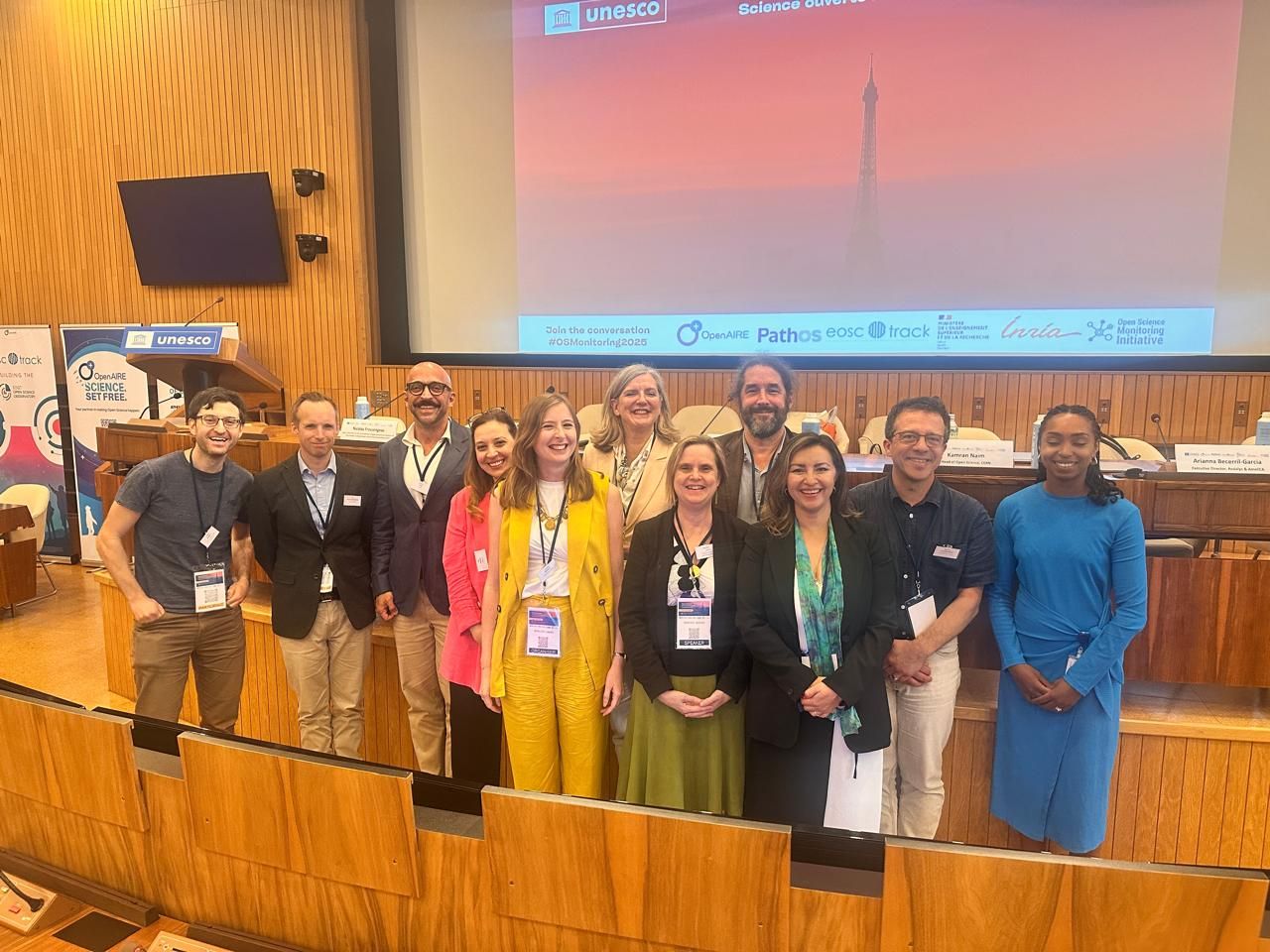
Launch of the Open Science Monitoring Principles!

A global milestone for Open Science transparency and inclusivity.
Unveiled on July 7, 2025, at UNESCO HQ, these Principles are the result of global collaboration across 40+ countries—designed to guide flexible, inclusive, and impact-driven monitoring frameworks.

Training for the Future: Education, Business, and the Challenge of STEM Careers

The second breakfast of the Tendencias Project by El País brings together training experts Silvia Pareja from Iberia, Ainara Zubillaga from the Cotec Foundation, and Eva Méndez from the OpenScienceLab research group.

OpenScienceLab member Paola Bongiovani elected to the DataCite Board

We’re proud to announce that Paola Bongiovani, member of OpenScienceLab and PhD in Documentation from UC3M, has been elected to the DataCite Board for 2025!

Join "Shaping Open Science Champions": a train-the-trainers course for educators of PhD candidates

This course invites you to enhance your role as a mentor by equipping you with tools to guide doctoral students through Open Science practices—covering Open Access, FAIR data, research data management, and responsible research. 

Contribute to this FAIR Principles General Reference Guide. (in Spanish)

This guide has been created with the support of various individuals and organizations committed to promoting FAIR principles. Other collaborators are invited to contribute improvements, updates, and additional examples.

Transforming research assessment: Eva Méndez and Rianne Letschert discuss CoARA and the role of young universities

The evaluation of research and academic contributions is undergoing a significant shift. As demands grow for a fairer, more transparent, and more accountable assessment system, initiatives like CoARA have been at the forefront of driving meaningful reform.

Open Science Community Madrid (OSCM)

The Open Science Community Madrid (OSCM) is an initiative aimed at promoting Open Science in the region by connecting individuals interested in this scientific approach. Through events, meetups, and collaborative projects, this community fosters learning, cooperation, and the sharing of ideas to drive more accessible and transparent science.

We would love to have you as part of this dynamic and enriching community. Your participation is key to building a more open and collaborative future together!